

The Most Beautiful Scenic Routes in Tuscany
Tuscany is a region that reveals its best when experienced in motion. Not so much on the main highways, but on the secondary roads—less fast and quieter—that wind through hills, vineyards, and small villages.
Here, the journey is not just a means to get from one point to another. It is an integral part of the experience. The rhythm changes, the perspective changes, and the way the territory is perceived changes. And it is precisely this difference that makes scenic roads so central to a well-executed trip.
Why Scenic Routes Truly Matter
Main roads are for arriving quickly. Scenic roads are for understanding where you are.
In Tuscany, choosing one route over another completely changes the experience. Secondary roads allow you to traverse the countryside, to see the landscape transform kilometer after kilometer, and to stop when something catches your eye. It is a slower, but much more engaging, journey.
Carefully planned routes, rather than random choices, add value to any tour. They make the trip continuous, fluid, less stressful, and much more authentic.
Val d’Orcia – The Most Iconic Roads in Tuscany
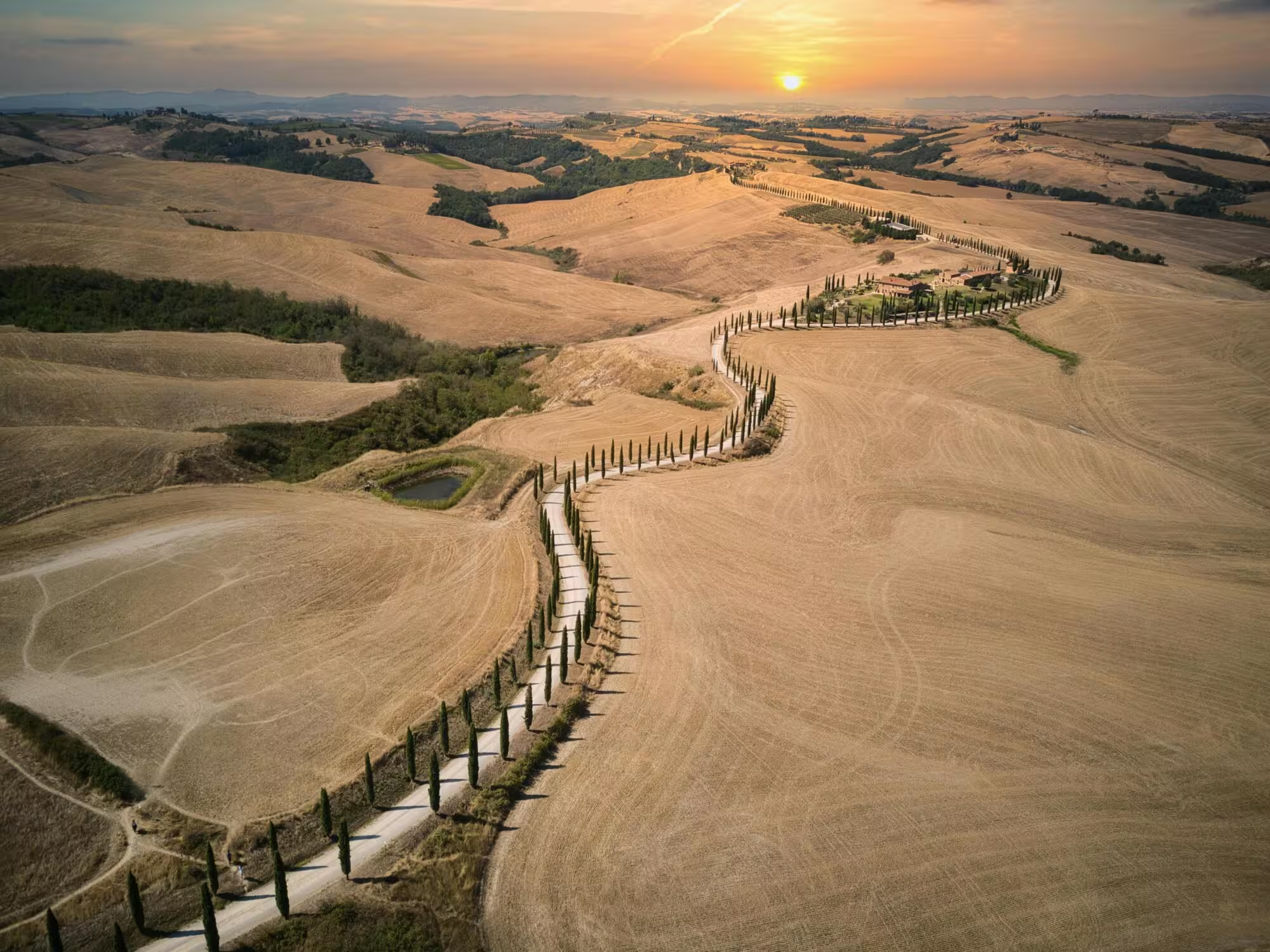
The Val d’Orcia is probably the most recognizable area of Tuscany. Rolling hills, open horizons, and a sense of space accompany you throughout the entire route.
The scenic roads here are immersed in the countryside and connect small villages without ever feeling repetitive. The cypress avenue has become a symbol, but it is not the only point of interest. The entire area invites you to stop often, to look, and to take your time.
This type of route is ideal for those who love photography, seek relaxation, and want a more contemplative than frantic experience.
Siena – San Gimignano Area
Some of the most enjoyable hill roads to travel are found between Siena and San Gimignano.
Here, the secondary roads are much more scenic than the main arteries. You pass through vineyards, cultivated fields, and small villages, with a continuous alternation that makes the journey varied and never monotonous.
It is a perfect area for half-day tours, where the connection between the villages feels natural and the pace remains constant, without ever giving the sensation of rushing.
San Gimignano – Volterra
The stretch between San Gimignano and Volterra offers a gradual change in the landscape.
The hills give way to woods and less touristy areas. The roads become more winding, but also more evocative. Here, you get the feeling of traversing a more authentic Tuscany, one less constructed for tourism.
It is an ideal route for those seeking less-traveled roads and a more intimate travel experience, where the landscape is an accompaniment without being a distraction.
Bolgheri and Tuscan Coast Area
The area of Bolgheri and the Tuscan coast is different from the inland. The landscape changes, as does the style of travel.
The roads pass through tidy vineyards and pine forests, and the routes are flatter and more relaxing. Here, the connection between the countryside and the sea is constant, and the atmosphere becomes more elegant, more measured.
It is an ideal area for wine tours and more refined experiences, also linked to the high-level wines that have made this area famous worldwide.
The Role of Scenic Routes in Tours
In a well-constructed tour, the route matters as much as the destination. Scenic roads are chosen not for speed, but for the scenery.
They allow you to stop along the way, adapt the pace, and make the journey more fluid. Compared to standard itineraries, they offer a more personalized and less stressful experience, where every movement has a purpose.
Visiting or Traversing Tuscany
Visiting Tuscany means seeing the main cities. Traversing it means understanding it.
Scenic roads create a deeper connection with the territory. They unite different places, landscapes, and times into a single, continuous journey. And it is often there, between one curve and the next, that Tuscany leaves its strongest mark.